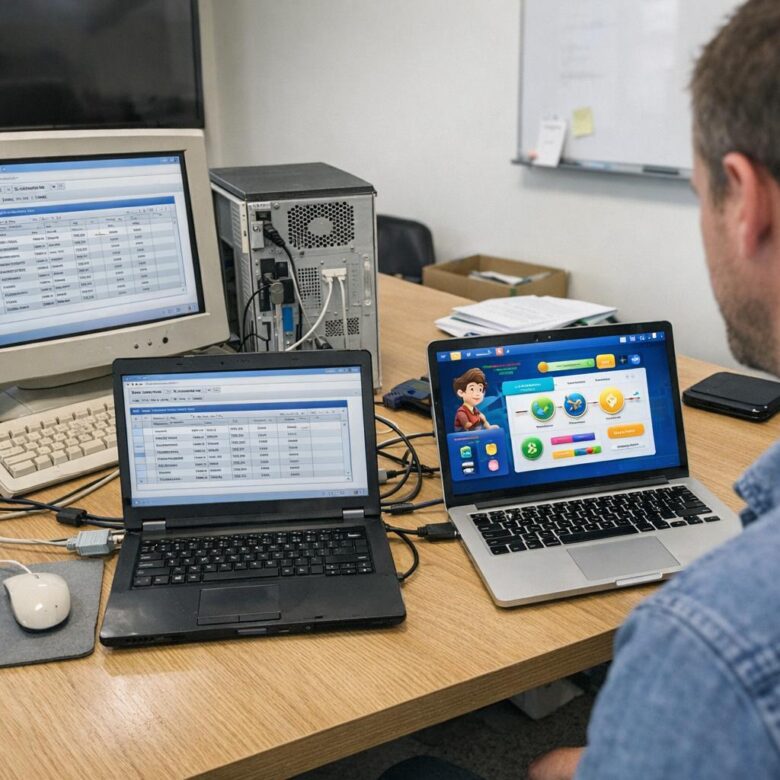
What if your oldest HR system is the biggest blocker to your most modern learning strategy?
Gamified learning platforms can boost engagement, skills adoption, and performance-but only when they connect cleanly with the employee data, roles, compliance records, and workflows already living inside legacy HR systems.
For many organizations, the challenge is not choosing a better learning experience; it is integrating innovation without disrupting payroll, reporting, security, or decades of HR process logic.
This article explores how to bridge that gap-turning legacy HR infrastructure from a constraint into a foundation for scalable, personalized, and measurable gamified learning.
Why Legacy HR Data Is the Foundation of Effective Gamified Learning Integration
Gamified learning only works when the platform knows who the employee is, what role they perform, which skills they need, and what compliance training they must complete. That information usually lives inside legacy HR systems, payroll software, or an older HRIS, not inside the new learning app. Without clean HR data integration, even the best employee training software can deliver the wrong modules, duplicate users, or miss mandatory certifications.
In practice, legacy HR data becomes the control layer for personalization, access, reporting, and workforce analytics. For example, a retail company using SAP SuccessFactors may need job codes, store locations, manager hierarchies, and employment status synced into a gamified LMS so cashiers receive point-based safety training while store managers see leadership simulations. This is where API integration, data mapping, and identity management matter more than flashy badges.
- Role-based learning: assigns training paths by department, job title, region, or seniority.
- Compliance accuracy: tracks required courses for regulated roles such as healthcare, finance, or manufacturing.
- Better ROI measurement: connects learning progress with performance reviews, retention, and promotion data.
A common mistake is treating integration as a one-time data migration project. In reality, HR data changes every day as employees join, transfer, get promoted, or leave, so the gamified learning platform needs ongoing synchronization. Investing in reliable HRIS integration services may add upfront cost, but it reduces manual admin work, improves audit readiness, and makes learning analytics far more useful for business decisions.
How to Connect HRIS, LMS, and Gamification Platforms Without Disrupting Employee Workflows
The safest way to integrate an HRIS, LMS, and gamification platform is to avoid making employees “learn another system.” Use single sign-on, automated user provisioning, and data sync rules so training appears inside the tools people already use, such as Microsoft Teams, Slack, or the company intranet.
Start by mapping the employee data that truly matters: name, role, department, manager, location, employment status, and required learning paths. For example, if Workday is the HRIS and Cornerstone OnDemand is the LMS, a new sales hire can be automatically enrolled in onboarding modules, assigned product training, and added to a leaderboard without HR manually updating three systems.
- Use SSO: Connect platforms through Okta, Microsoft Entra ID, or Google Workspace to reduce password issues and help desk tickets.
- Automate provisioning: Use SCIM or API integrations so employees are added, updated, or removed based on HRIS status.
- Sync only useful data: Avoid pushing sensitive payroll or performance data into learning tools unless there is a clear compliance need.
In practice, the biggest integration problem is not the technology; it is messy data ownership. HR usually owns employee records, L&D owns course completion, and IT owns identity access management. Before buying integration services or middleware, define who approves field changes, sync frequency, access permissions, and error handling.
For legacy HR systems, an iPaaS tool like MuleSoft, Workato, or Boomi can bridge older databases with modern gamified learning software. A phased rollout works best: test one department, monitor login issues and completion tracking, then expand after the workflow feels invisible to employees.
Common Integration Mistakes That Undermine Learning Analytics, Compliance, and User Adoption
One of the biggest mistakes is treating integration as a simple data transfer instead of an ongoing HR technology workflow. If employee IDs, job roles, departments, or manager hierarchies do not sync cleanly between a legacy HRIS and a gamified learning platform, learning analytics quickly become unreliable.
A real-world example: a company connects an older payroll system to Workday and a modern LMS, but fails to map terminated employees correctly. The result is active training assignments for former staff, inaccurate compliance reports, and unnecessary software licensing costs.
- Ignoring data governance: Define ownership for employee records, role changes, course completion data, and audit logs before launch.
- Skipping API testing: Test edge cases such as contractors, transfers, rehires, and multi-location employees, not just standard full-time users.
- Overcomplicating user access: Too many logins or broken single sign-on can reduce adoption, even when the learning content is strong.
Another common issue is failing to involve compliance, IT security, and learning teams at the same time. For regulated industries such as healthcare, finance, and manufacturing, integrations must support audit trails, data privacy controls, and mandatory training evidence from day one.
In practice, the best results come from starting with a limited pilot group, reviewing reporting accuracy, and fixing sync errors before a company-wide rollout. Clean integration costs less than repairing bad compliance data later.
Wrapping Up: Integrating Legacy HR Systems With Modern Gamified Learning Platforms Insights
Integrating legacy HR systems with modern gamified learning platforms is not just a technical upgrade-it is a workforce strategy decision. The right approach should protect existing data, reduce administrative friction, and make learning measurable in everyday HR workflows.
Practical takeaway: prioritize platforms with flexible APIs, strong security controls, clean data mapping, and proven compatibility with your HR environment. If integration requires excessive customization or disrupts core HR processes, reconsider the fit.
Choose a solution that supports both current infrastructure and future learning needs. Successful integration should make employee development easier to manage, easier to track, and more valuable to the business.

RPG Gamitrix Editorial Team publishes practical, source-based guides about enterprise learning, professional certifications, gamification, learning management systems, and B2B educational technology.